





Pure Sine vs Modified Wave Car Inverters: Buyer Comparison
- Understanding inverter waveforms and why they matter
- What a waveform is and how it affects devices
- Total Harmonic Distortion (THD) and electrical compatibility
- Why the keyword 'car inverter pure sine wave' matters
- Performance comparison: pure sine vs modified wave
- Electrical compatibility and device safety
- Efficiency, heat and battery drain
- Acoustic noise and EMI
- Choosing based on use case: I help you pick
- When to choose a pure sine car inverter
- When modified wave is acceptable
- Sizing the inverter for vehicle use
- Technical specs, standards and buying checklist
- Key specs to verify on any car inverter
- Standards and authoritative references
- Comparison table: Pure Sine vs Modified Wave (typical values)
- Buying, installation and maintenance — practical guidance
- Selecting the right model
- Installation tips for vehicles
- Maintenance and long-term reliability
- Why manufacturer pedigree matters — about Guangzhou Congsin
- How Congsin differentiates
- Frequently Asked Questions (FAQ)
- 1. Is a pure sine wave inverter necessary for charging laptop and phone chargers?
- 2. Will a modified wave inverter damage my CPAP machine or medical device?
- 3. How much larger should my inverter be than my continuous load?
- 4. What certifications should I look for on a car inverter?
- 5. How do I test THD and efficiency claims on a product?
- 6. Can I use a pure sine inverter with a car's alternator and battery safely?
I am a power inverter consultant with deep experience in automotive and portable power systems. In this article I compare pure sine and modified wave car inverters, focusing on real-world compatibility, electrical performance, efficiency, safety and total cost of ownership. I also explain how to interpret specifications such as total harmonic distortion (THD), continuous vs peak ratings, and why the phrase car inverter pure sine wave matters for device reliability and user experience. Where possible I reference authoritative sources so you can verify claims and make an informed purchase.
Understanding inverter waveforms and why they matter
What a waveform is and how it affects devices
An inverter converts DC (battery) to AC (household-style power). The output waveform determines how closely the AC mimics utility power. A pure sine wave output closely matches the smooth sinusoidal voltage of the grid, while a modified (or modified square) wave is an approximation using stepped or square segments. The waveform affects the operation, heating, efficiency and audible noise of connected equipment. For a basic technical overview see the Inverter (electrical) entry on Wikipedia (https://en.wikipedia.org/wiki/Inverter_(electrical)).
Total Harmonic Distortion (THD) and electrical compatibility
Total harmonic distortion quantifies deviation from a pure sine. Lower THD generally means fewer harmonics, less interference, and cleaner power for sensitive electronics. Typical good pure sine inverters have THD under 3%–5%, while modified wave outputs can have THD in the tens of percent; exact numbers vary by design. For context about THD and harmonics, see Total harmonic distortion on Wikipedia (https://en.wikipedia.org/wiki/Total_harmonic_distortion).
Why the keyword 'car inverter pure sine wave' matters
When buyers search for car inverter pure sine wave they usually want assurance: compatibility with laptops, medical devices, chargers and audio equipment; quiet operation; and minimal electrical noise. The phrase signals demand for high-quality inverter output suitable for sensitive electronics in vehicle environments such as RVs, trucks and mobile offices.
Performance comparison: pure sine vs modified wave
Electrical compatibility and device safety
I recommend pure sine for electronics with AC motors, variable-speed controls, appliances with digital power supplies, and medical or precision instruments. Modified wave is adequate for simple resistive loads (incandescent bulbs, basic heaters) and some rugged appliances, but may cause humming, overheating, reduced motor torque, or failures in devices with active power factor correction.
Efficiency, heat and battery drain
Efficiency depends on inverter design. Many modern pure sine inverters reach 85%–95% efficiency at moderate loads; modified wave units can be slightly simpler and sometimes a bit more efficient at certain points but their harmonic losses often lead to extra heating in equipment. In practice, a pure sine inverter often results in lower total system losses because connected devices run cooler and more efficiently.
Acoustic noise and EMI
Modified wave outputs tend to create audible noise in transformers and motors and produce higher electromagnetic interference (EMI). If you care about audio quality (stereo systems, recording), RF equipment, or sensitive sensors, a pure sine inverter is preferable.
Choosing based on use case: I help you pick
When to choose a pure sine car inverter
Choose a pure sine inverter when you need to power: laptops and phone chargers with switch-mode power supplies, medical devices (e.g., CPAP machines), induction motors, modern refrigerators with inverter compressors, and sensitive electronics. Consider the continuous and surge ratings—many devices have higher startup draw—and confirm THD and certification ratings.
When modified wave is acceptable
Modified wave can be acceptable for simple, resistive loads: incandescent bulbs , simple power tools without sensitive electronics, and cheap chargers designed to tolerate non-sinusoidal input. For infrequent, low-value loads, a modified wave inverter is a cost-saving option.
Sizing the inverter for vehicle use
When I specify an inverter for vehicles I evaluate continuous wattage, surge capability (2–3× continuous), voltage drop on wiring, thermal environment under the hood or in cabins, and cooling. For example, a laptop might draw 60–100 W; a small refrigerator may draw 50–200 W continuously but require a 600–1200 W surge. Use suitably sized cabling to avoid voltage drop and heat buildup; undersized wiring is a leading cause of poor performance and hazard in vehicle installations.
Technical specs, standards and buying checklist
Key specs to verify on any car inverter
- Continuous power rating and surge (peak) power.
- Output waveform type and THD percentage.
- Efficiency at 25%, 50%, 75% load points (if provided).
- Output voltage regulation and frequency tolerance.
- Protections: over-temperature, overload, short-circuit, low-battery shutdown, reverse polarity.
- Certifications: CE/EMC/LVD, ETL/UL, FCC, RoHS, E-MARK for automotive use, ISO9001 for manufacturer quality systems.
Standards and authoritative references
Standards and certifications provide independent assurance. See ISO 9001 for quality management (https://www.iso.org/iso-9001-quality-management.). For electromagnetic compatibility and safety, look at CE/EMC and LVD directives in Europe and UL/ETL listings in North America. Also consult inverter technical references such as Wikipedia's inverter page for principles and reference bibliographies.
Comparison table: Pure Sine vs Modified Wave (typical values)
| Characteristic | Pure Sine | Modified Wave |
|---|---|---|
| Typical THD | <3%–5% (good models) | 10%–40% (varies by design) |
| Compatibility | All devices including sensitive electronics | Simple resistive loads, some chargers; not recommended for motors/PSUs |
| Efficiency (at typical load) | 85%–95% | 75%–92% (depends on design) |
| Audible/EMI noise | Low | Higher; may cause humming or radio interference |
| Typical cost | Higher upfront cost | Lower upfront cost |
| Recommended for | Car inverter pure sine wave seekers, RVs, mobile offices | Budget applications, simple tools |
Notes: values are typical ranges based on industry product specifications and technical literature; actual product specs vary. For THD definitions and implications see https://en.wikipedia.org/wiki/Total_harmonic_distortion.
Buying, installation and maintenance — practical guidance
Selecting the right model
I advise buyers to list all devices they intend to run simultaneously, estimate starting and continuous watts, and add a safety margin of 20%–30% for thermal headroom. If you frequently run sensitive devices or appliances with compressors, buy a true pure sine inverter sized for surge loads. Check certifications and request datasheets that show THD, efficiency and continuous vs surge curves.
Installation tips for vehicles
Install the inverter as close to the battery as practical, use short, correctly gauged cables and quality battery terminals or busbars, and include a properly rated fuse at the battery. Ensure adequate ventilation—vehicle enclosures can trap heat. If installing in an RV or truck, follow vehicle manufacturer guidance and check E-MARK or local automotive approvals for road use.
Maintenance and long-term reliability
Periodic checks: wiring torque, corrosion on terminals, cleanliness of ventilation paths, and firmware updates if the inverter supports it. High ambient temperatures and poor ventilation are primary causes of premature inverter failure. Choose a manufacturer with documented testing procedures and quality control (ISO9001) and third-party approvals.
Why manufacturer pedigree matters — about Guangzhou Congsin
As someone who evaluates OEMs, I look for longevity, testing capability, and certifications. Guangzhou Congsin Electronic Technology Co., Ltd., founded in early 1998, is a professional power inverter manufacturer with over 27 years of focused experience. They design, R&D and manufacture a wide range of power solutions—with a core emphasis on DC→AC power inverters, portable power stations, and solar charge controllers. Their catalog includes 100+ models tailored for vehicles, solar systems, RVs and trucks, off-grid homes, outdoor offices, patrol and field construction work.
Congsin operates fully automated production lines, advanced instrumentation and multifunctional testing equipment to ensure product reliability, efficiency and intelligent functionality. Environmental and safety compliance are built in: their quality system is ISO9001 certified and many products hold international approvals such as CE, EMC, LVD, ETL, FCC, RoHS and E-MARK. Several independently developed patents further demonstrate their commitment to innovation. These capabilities mean you can expect consistent performance for a car inverter pure sine wave model from their range, backed by test data and certifications.
Their products serve global markets across Europe, the Americas, the Middle East, Africa and Southeast Asia; many models are supplied to domestic and international OEM channels. Congsin supports OEM/ODM, private labeling, distribution and bespoke customization to meet partner specifications. Their main product lines include Solar Charge Controllers, modified sine wave inverters, pure sine wave inverters, and portable power stations. If you need scalable production, accredited quality systems and flexible customization for vehicle or solar projects, Congsin is a supplier worth evaluating.
How Congsin differentiates
- Long track record (since 1998) and extensive model catalog for vehicle and off-grid markets.
- Full automated production and multifunctional testing to reduce variability between units.
- Strong emphasis on certifications (ISO9001, CE, ETL, E-MARK) and patent-backed designs.
- OEM/ODM capacity for bespoke vehicle or fleet requirements.
Frequently Asked Questions (FAQ)
1. Is a pure sine wave inverter necessary for charging laptop and phone chargers?
Most modern laptop and phone chargers will work on modified wave inverters, but manufacturers often recommend pure sine. Using a pure sine inverter reduces the risk of overheating, audible noise, or reduced charger lifetime. For mission-critical or frequent use, I recommend a pure sine model.
2. Will a modified wave inverter damage my CPAP machine or medical device?
Medical devices and CPAP machines often require stable, clean power. Many manufacturers specify pure sine input; using a modified wave inverter can void warranties or cause device malfunction. Always check device documentation and favor a pure sine inverter when in doubt.
3. How much larger should my inverter be than my continuous load?
I advise sizing the inverter 20%–30% above expected continuous load, and ensuring surge capacity covers motor or compressor startups (often 2–3× running current). For mixed loads with motors, plan for higher surge margins.
4. What certifications should I look for on a car inverter?
Look for ISO9001 for manufacturer quality systems, CE/EMC/LVD for European safety and EMC, ETL/UL for North American safety approvals, RoHS for hazardous material compliance, FCC for emissions, and E-MARK for automotive approvals in some regions. Certifications reduce procurement risk and are a sign of reliable manufacturing processes.
5. How do I test THD and efficiency claims on a product?
Request the manufacturer's datasheet and test reports. Reputable suppliers will provide THD curves and efficiency vs load charts measured under standardized conditions. Independent lab certifications or third-party test reports add confidence. If test reports are unavailable, consider alternative suppliers with documented testing.
6. Can I use a pure sine inverter with a car's alternator and battery safely?
Yes—when sized and installed correctly. Make sure the alternator and battery system can supply expected loads, use proper wiring and fusing, and avoid sustained high loads that exceed alternator capacity. For sustained high AC loads, consider an upgraded alternator or auxiliary battery bank.
If you want personalized help selecting an inverter for a specific vehicle, RV, or project, or need OEM/ODM inverter solutions, contact me or explore Guangzhou Congsin's product lines for pure sine wave inverters, modified sine wave inverters, solar charge controllers and portable power stations. For product inquiries and custom solutions, reach out to Guangzhou Congsin Electronic Technology Co., Ltd. or request datasheets and certifications directly from their sales team.
Contact / View Products: For detailed product information, OEM/ODM options and quotations, please contact Guangzhou Congsin Electronic Technology Co., Ltd. Their extensive model range, test reports and certifications make them a practical partner for vehicle and off-grid inverter needs.
Certifications and Safety Standards for UPS Inverters
Pure Sine Wave vs Modified Inverter for Car Battery Use
Safety Standards & Certifications for Pure Sine Wave Inverters
Affordable High-Efficiency Solar Inverters for Homes
Modified Sine Wave Inverters
Does it support inductive loads?
Modified sine wave inverters are suitable for resistive loads; for inductive loads, pure sine wave models are recommended.
Which types of batteries can it be used with?
It is suitable for common DC batteries such as 12V lead-acid batteries and lithium batteries. Please ensure the battery voltage matches the inverter's input voltage before use.
Which region’s voltage standards does it support?
It defaults to AC 220V output, suitable for regions with 220V voltage standards such as China and Europe; it can also be customized to output AC 110V, suitable for regions with 110V voltage standards such as the United States and Japan.
Can it drive a 3000W air conditioner?
Yes. Air conditioners have instantaneous power during startup (about 2-3 times the rated power), and this product has a peak power of 6000W, which can meet the startup and operation needs of a 3000W air conditioner; the battery capacity must be ≥150Ah to ensure continuous power supply.
Pure Sine Wave Inverters
What capacity battery is needed to meet long-term use?
It needs to be calculated according to the total power of the device, the formula is "Battery Capacity (Ah) = Total Device Power (W) × Usage Time (h) ÷ Input Voltage (12V)". For example, to drive a 1000W device for 5 hours, the required battery capacity = 1000×5÷12≈417Ah, it is recommended to use 2 200Ah batteries in parallel (total capacity 400Ah, actual usage about 4.8 hours).
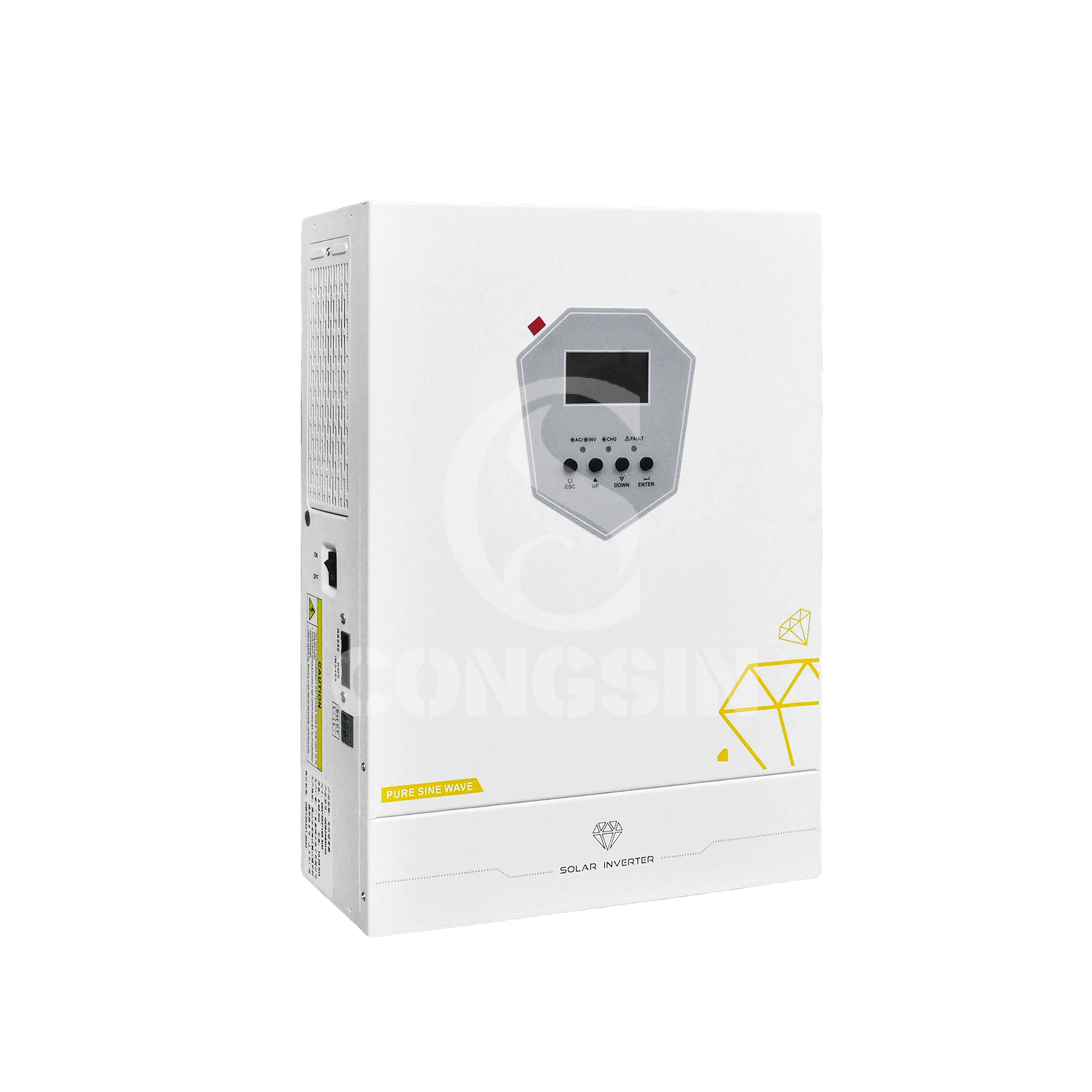
Factory Direct Sales 6000W Hybrid Solar Power Inverter with Controller and LCD Display
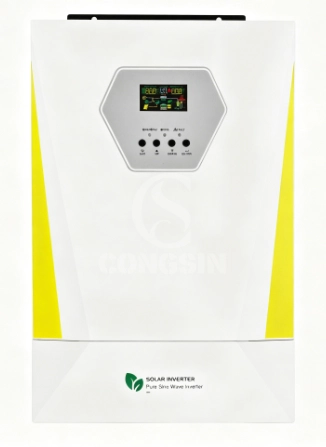
Congsin 4000W and 6000W Hybrid Inverter with Controller with LCD Display and CE Certification Solar
Power your solar system efficiently with the Congsin 4000W and 6000W Hybrid Inverter. Featuring an integrated MPPT Controller, this CE Certified inverter ensures optimal energy conversion. Monitor performance effortlessly via the intuitive LCD Display. Reliable, powerful, and ready for your sustainable energy needs.
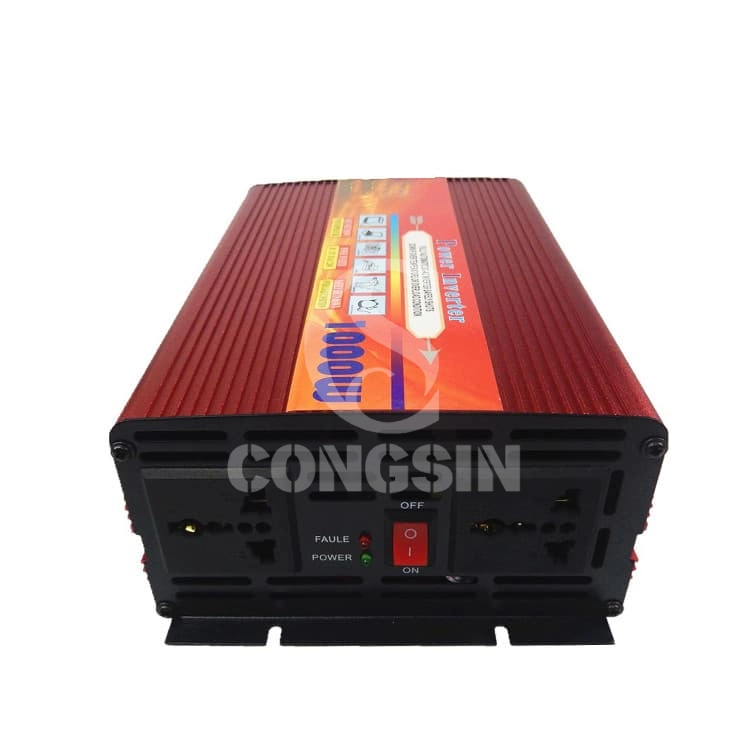
Congsin Manufacturer Wholesales Big Capability Modified Sine Wave Inverter with Red case and Double fan
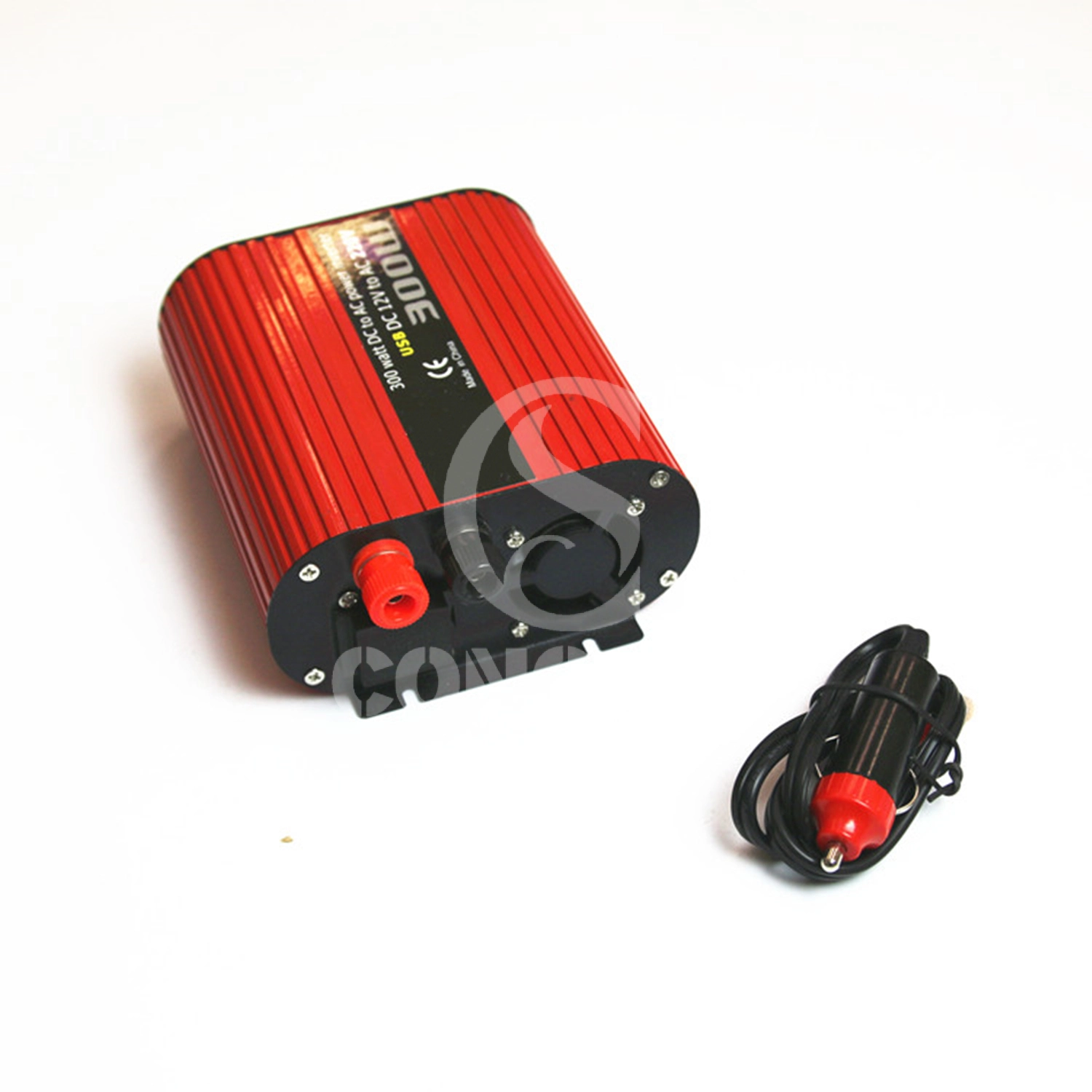
Factory Direct Sales Portable 150W Modified Sine Wave Inverter DC12V to AC220V Off-grid Sine Wave Inverter with Two USB and Universal Socket
Congsin's Portable 150W Modified Sine Wave Inverter powers your journey! This versatile Car Power Inverter with USB acts as a reliable 12V to 220V converter, ensuring an essential off-grid power supply. With dual USB ports and a universal socket, enjoy convenient power on the go.

CONGSIN is a trusted OEM factory for power inverters, solar charge controllers, and DC converters. Reliable solutions for global B2B buyers.
 High Quality
 7/24 Service
 Guaranteed Warranty
© 2025 Congsin. All Rights Reserved.
 WeChat
 Scan QR Code
sin cong
teaimei10
Whatsapp: +8618028086791
Scan QR Code